Design
Microcement for commercial interiors: cafés, salons, retail and offices
Seamless, durable and easy to clean, microcement suits cafés, salons, retail and offices. How to plan it around trading, other trades and cleaning.
Key takeaways
- Microcement gives commercial interiors a seamless, durable surface that is straightforward to keep clean in busy environments.
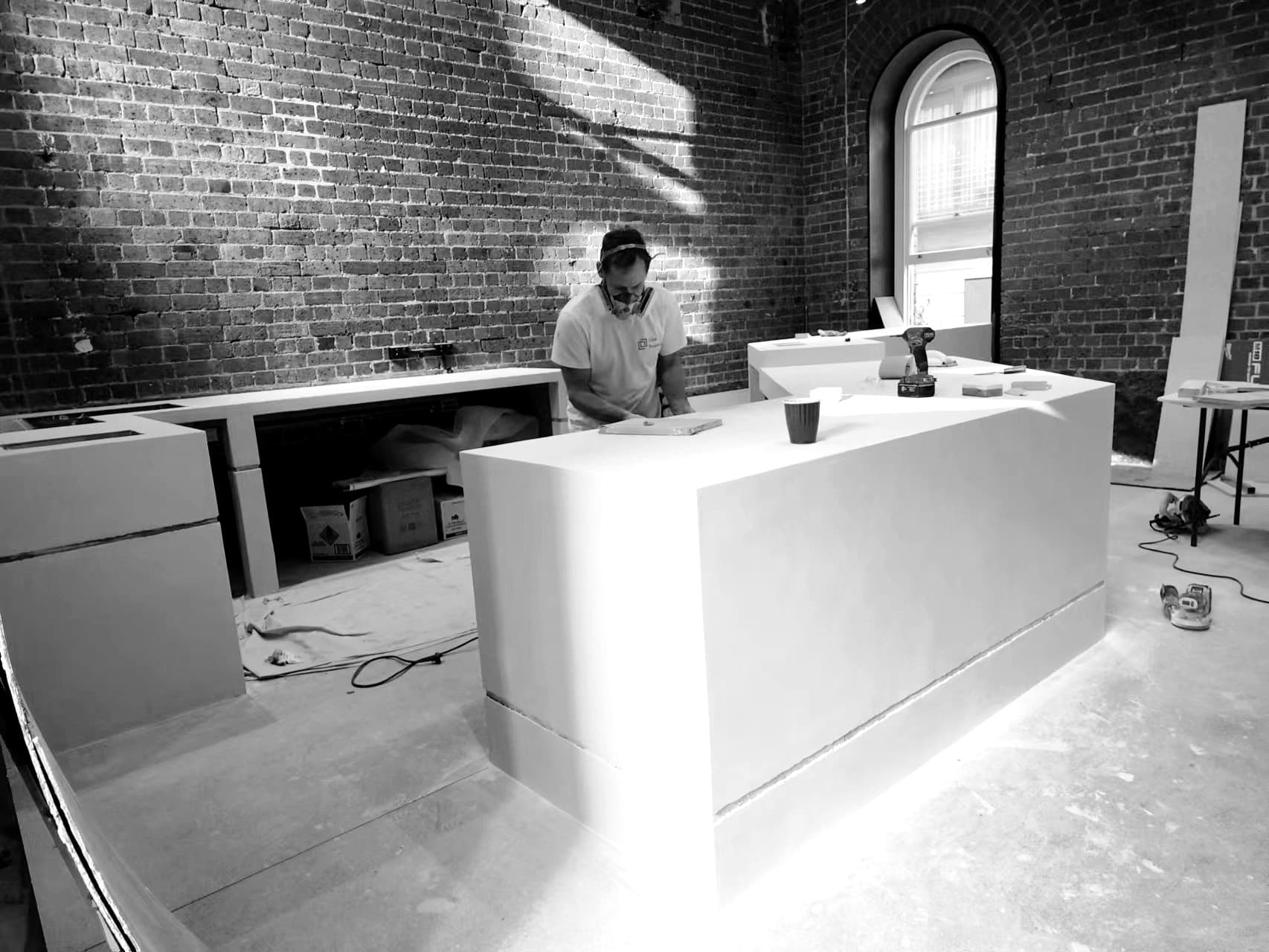
- It can run across floors, walls, counters and curved forms, as it does at ULA Café in Collingwood, designed by SuiL Architects.
- Colour and texture can carry a brand, from calm neutrals to saturated, metallic and marbled finishes.
- Application typically takes 5 to 7 days, so staging, trade sequencing and the first week of curing belong in the program from the start.
Microcement for commercial interiors solves a familiar problem: how to make a busy space look calm and stay practical. Cafés, salons, shops and offices can run one continuous surface across floors, walls, counters and joinery, with no grout lines to trap dirt and far fewer edges to chip or wear.
This guide explains why the material suits commercial work, where it performs best, how it can express a brand and how to plan an installation around trading, other trades and cleaning routines.
Why microcement suits busy commercial spaces
- A seamless finish. A continuous, joint-free surface looks clean and leaves fewer places for grime to collect.
- Durability. Microcement resists traffic, knocks, scratches and chemicals, making it a viable choice for high-traffic areas.
- Easy upkeep. Once sealed, it is water-resistant and cleans with a simple routine and a pH-neutral cleaner.
- Low thickness. At around 2–3 mm, it can go over many suitable existing surfaces with little added weight, which can simplify a fit-out.
- Less disruption. Application is quicker and less disruptive than many traditional renovations, with no rubble or major construction work.
Those qualities matter most in spaces that open to the public every day, where appearance, cleaning time and downtime all carry a cost.
Where it works: cafés, salons, retail and offices
Cafés and hospitality
Counters, bar fronts, bench seating, feature walls and floors can all share one finish, giving a small venue a cohesive, architectural feel. Coffee, oil and food spills are part of daily trade, so a sealed surface and a prompt wiping routine are essential. Our commercial applications page shows more options.
Salons
Reception desks, styling stations, walls and floors suit the clean lines of microcement. Around basins, a sealed surface is water-resistant, but products such as hair colour should be wiped away promptly, and wet-area waterproofing should be confirmed with your builder.
Retail
A continuous backdrop lets products stand out. Microcement can wrap display plinths, counters and change-room walls, with neutral finishes keeping the focus on the merchandise and stronger colours reinforcing a brand.
Offices
Reception areas, meeting rooms and feature walls benefit from a restrained, contemporary finish that is more hard-wearing than paint. See microcement offices for workplace ideas.
Continuous forms: counters, curved walls and thresholds
Because microcement is hand-trowelled in thin layers, it can follow shapes that tiles and sheet materials struggle with. Curved walls, rounded counters, built-in benches, columns and window reveals can be finished in the same material as the floor, so the architecture reads as one piece.
Purpose-built counters, benches and display plinths need a suitable, stable substrate of their own. Natural timber is not advised as a base, so agree the substrate material with your joiner early, before anything is built.
Thresholds deserve early attention. Carrying a finish from the entry into the interior creates a strong first impression, but the detailing at doors, drains and junctions with other materials needs to be agreed during planning so it performs as well as it looks.
Case study: ULA Café, Collingwood
Luxury Concrete collaborated with SuiL Architects on ULA Café in Collingwood, Victoria. Designed by SuiL, the interior is a monolithic café in which curved walls and restrained texture make one continuous room, with microcement applied to the curved walls, counters and thresholds.
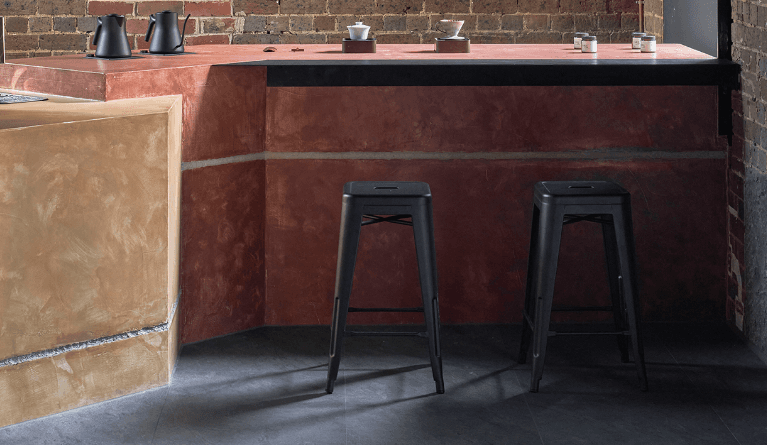
The project has been featured on numerous global media platforms, including ArchDaily, Superfuture and MasilWIDE / A&C Magazine. It shows microcement working as architecture rather than decoration: the same material shapes the walls, forms the counters and carries through the thresholds. See more images on the ULA Café project page.
Expressing a brand through colour and texture
Colour and texture give a commercial interior its identity. The whites, greys and charcoal of the Basic collection create a calm, gallery-like backdrop, Warm and Nordic tones soften hospitality spaces, the saturated Live collection can pick up a brand colour, and Oxid Metal and Gemstone finishes turn a counter or feature wall into a signature piece. You can compare every collection on our colours and textures page.
Sheen matters too. A matte finish hides fingerprints and reduces glare, while a glossier finish deepens colour but shows marks more readily. Commercial lighting is often cooler than residential lighting, so compare samples under the actual fit-out lighting where possible, as our guide to choosing a microcement colour explains.
If your brand has more than one site, keep a record of the collection, colour and sealer used in each fit-out. Future work can then be matched as closely as possible, bearing in mind that a hand-trowelled finish always varies slightly from one surface to the next.
Planning around trading and other trades
The application process typically takes 5 to 7 days, depending on the size and complexity of the project, and the surface continues to harden over several weeks. For a business, that timing needs to be built into the program from the start.
- Confirm scope early. List the floors, walls, counters and furniture in scope, and have each substrate assessed for stability, level, cleanliness and humidity below 5%.
- Decide how to stage. Discuss whether to close for the works or split them into zones. Each zone still needs its full layer sequence and drying time.
- Sequence other trades. Plan for demolition, dusty work and services rough-in to be complete before microcement starts, and for fit-off and deliveries to follow once the surface can take them.
- Allow for the first week. Schedule stock, furniture and equipment so nothing heavy is dragged across a new floor in its first week.
- Agree protection. If trades must return after application, agree how the finished surfaces will be protected and by whom.
Our guide to how long microcement takes explains the application sequence stage by stage.
Traffic, cleaning regimes and upkeep
Commercial floors see far more grit, traffic and cleaning than most homes, so the cleaning regime matters as much as the finish. Some commercial cleaning products contain bleach, ammonia, solvents or acids that are hard on sealers, so agree the products and methods before the space opens.
- Give your cleaning contractor written care instructions, including the products to avoid.
- Use entrance matting to catch grit at the door.
- Fit felt pads or soft glides to chairs and stools that move all day.
- Schedule periodic sealer checks for the busiest paths, such as entries, counters and service areas.
For a full routine, see our guide to cleaning and maintaining microcement. When you are ready to plan your fit-out, contact us with drawings or photos, the surfaces in scope and your preferred timing.
Frequently asked
01Is microcement durable enough for a busy café or shop floor?
Microcement is designed to resist traffic, knocks, scratches and chemicals, which makes it a viable choice for high-traffic areas. Its long-term performance still depends on a stable substrate, correct sealing and a suitable cleaning regime, and the busiest paths will need sealer maintenance sooner than quieter areas.
02Can microcement be installed without closing my business?
It depends on the size and layout of the space. Each area needs its full layer sequence and drying time and must be closed off while that happens, so the usual choices are a short closure or staging the work zone by zone. The right approach is agreed once the scope is clear.
03Can microcement be used on counters and bar fronts?
Yes. Microcement can be applied to suitable, stable substrates on furniture and joinery as well as walls and floors, which lets counters and bar fronts share one continuous finish with the rest of the room, as at ULA Café. Surfaces that see coffee, oil or other spills should be wiped promptly as part of daily cleaning.
04What information helps with a commercial microcement quote?
Drawings or photos, the surfaces and approximate areas in scope, the existing substrates, your preferred program and any trading constraints. Cost varies with the condition of the substrate, the complexity of the work and other project requirements, so an on-site assessment is usually part of confirming a price.
Keep reading
Related guides.

How to choose a microcement colour and texture
From soft whites to oxidised metals, how a microcement colour reads depends on light, texture and sheen. A practical guide to narrowing the choice.
How long does microcement take to install?
Most microcement applications take 5 to 7 days, depending on size and complexity. The indicative sequence, what can extend it and how to plan around it.

Cleaning and maintaining microcement: a practical care guide
A simple routine keeps sealed microcement looking its best. What to use, what to avoid, how to handle spills and when the sealer needs attention.