11 questions
Microcement questions worth answering early.
Search practical information about substrates, application, wet areas, care and project planning.
Microcement questions
Everything we are asked.
Project-specific suitability should always be confirmed after reviewing the actual surface and intended use.
Ask your own question11 of 11 questions
01What is microcement?
Microcement is a polymer-modified cement-based coating used for both interior and exterior applications. It is highly appreciated in the construction and design industries for its versatility and aesthetic qualities. Its primary components include a blend of cement, water-based resins, additives and mineral pigments, which together create a material that can adhere to almost any type of surface, including floors, walls, ceilings and furniture.
Applying microcement creates a smooth, seamless surface, eliminating the joints or breaks typical of traditional flooring and wall coverings. This continuity offers a sleek, modern look and can help create visually larger, unified spaces.
Available in a variety of colours and textures, microcement can be customised to match many designs or decor styles. From matte to glossy finishes and rough to smooth textures, the design possibilities are extensive.
Despite its thin application of around 2-3 mm, microcement is notably durable and resistant to wear and tear, making it a viable choice for high-traffic areas. Its low thickness also adds little weight or load to a building's structure.
It can be applied directly to a suitable existing surface, which can simplify installation and reduce construction time and costs. In summary, microcement is a versatile, aesthetically pleasing and practical material for covering a variety of surfaces.
02On which types of surfaces or materials can microcement be applied?
Microcement can be successfully applied on a wide range of substrates, including cement mortar, self-levelling mortar, terrazzo, marble, tile, plaster, plasterboard and metal. It is compatible with both vertical and horizontal surfaces and can be used in interior and exterior settings.
However, it is not advised for natural wood or substrates made from pieces that may expand at different rates. The key requirement is that the substrate must be stable, level, free of dirt and have a humidity level below 5%.
03What does the process of applying microcement involve?
1. Surface preparation: Clean and prepare the surface so it is free from dust, grease, old paint or anything that may prevent an effective bond. If applying to tiles, check that they are firmly adhered and stable.
2. Primer application: Apply a primer to support adhesion, seal the surface and help prevent moisture problems, then leave it to dry.
3. First base layer: Apply the first layer of microcement base with a trowel and leave this scratch coat to dry.
4. Second base layer: Apply a second base coat and allow it to dry completely.
5. Sanding: Sand the dry base layers to remove irregularities and prepare for the finishing layers.
6. Finishing layers: Apply two layers of finer finish microcement, allowing each to dry and sanding before the next layer.
7. Sealing: Seal the dry finished surface to protect it from wear, water and stains and to enhance the colour. Several coats may be required.
8. Polishing: Polish the sealed surface for a smooth, flawless finish.
04What are the advantages of microcement?
Versatility: It can be applied to nearly any suitable substrate and to vertical and horizontal surfaces, including floors, walls, ceilings and furniture.
Aesthetic appeal: It offers a sleek, modern look with a wide range of colours and finishes.
Seamless finish: It creates a continuous, joint-free surface.
Durability: It resists traffic, knocks, scratches and chemicals, making it suitable for high-traffic areas.
Water resistance: With a suitable sealer, it can become water-resistant.
Low thickness: At 2-3 mm, it does not significantly affect a building's structural load.
Eco-friendly: Microcement is made from natural materials, making it a sustainable choice.
Easy maintenance: It is easy to clean and maintain and provides a germ and bacteria-resistant surface.
Quick installation: Application is quicker and less disruptive than many traditional renovations, with no rubble or major construction work required.
05How does microcement withstand exposure to water?
Microcement itself is not waterproof. However, when a proper sealer is applied as the finishing layer, it becomes water-resistant. With appropriate finishing, microcement can be used effectively in bathrooms, kitchens and other areas exposed to water or humidity.
06What is the typical duration of the microcement application process?
The application process typically takes 5 to 7 days, depending on the project's size and complexity. This includes surface preparation, multiple microcement layers and final sealing.
Microcement continues to harden and gain full strength over several weeks after application. Take care with the surface during the first week after completion while it develops its full hardness and resistance.
07How much does microcement cost?
Luxury Concrete's microcement application generally ranges from $160 to $300 AUD per square metre, including materials and labour. The exact cost varies with the substrate's condition, the complexity of the work and other project requirements.
Purchasing microcement material alone typically ranges from $40 to $50. Contact Luxury Concrete for a more precise quote.
08Can microcement be applied over existing tiles? Why is microcement more expensive than some tiles?
Yes. Microcement can be applied directly over existing tiles because of its strong adhesion, avoiding the time-consuming and messy process of removing the original tiled surface.
Microcement can cost more than some tiles because its application is labour-intensive and requires a professional to hand-trowel multiple layers. It creates a bespoke, seamless finish that tiles cannot achieve and can be customised in a wide variety of colours and finishes.
It can be applied to floors, walls, ceilings and furniture across interior and exterior spaces. Its durability, water resistance and easy maintenance when correctly finished also contribute to its long-term value.
09Will microcement crack?
Microcement is designed to be durable and flexible, making it resistant to cracking under normal conditions. When professionally applied to a stable, suitable substrate and properly maintained, it should not crack.
Like any material, it may crack if the substrate moves significantly, the building shifts, it experiences extreme physical stress or it is applied incorrectly. The substrate should be stable before application, and the finished microcement should be properly sealed and maintained. Luxury Concrete microcement products come with warranties for added peace of mind.
10Can microcement be applied on top of underfloor heating systems?
Yes, microcement can be applied over underfloor heating systems, but specific protocols are required to help prevent cracks caused by substrate temperature changes.
1. Turn on the heating at least four weeks after laying the cement mortar or other base layer.
2. Keep the circuit inlet water at about 25°C for 2 to 3 days, then gradually increase it to 45°C and maintain that temperature for a few days.
3. Switch off the heating at least 48 hours before microcement installation. The maximum floor temperature should be about 18°C.
4. Apply microcement to a cementitious mortar or another suitable substrate that has reached an advanced setting stage, typically after three to four weeks depending on the weather.
Always change the temperature gradually at the start and end of a heating period. Avoid very low relative humidity and heat build-up caused by rugs, carpets or insufficient space beneath furniture. An expansion joint is also required between the screed and vertical walls so the screed can expand. Cracks may appear if these requirements are not followed.
11What are the differences between microcement and polished concrete?
Microcement and polished concrete are both popular for floors and walls because of their modern, industrial aesthetics, but they differ in several ways.
1. Thickness and weight: Microcement is a coating around 2-3 mm thick that can be applied to almost any suitable existing surface with minimal added weight. Polished concrete is a heavy, thick concrete layer that is ground and polished.
2. Application: Microcement can be used on floors, walls and furniture, indoors and outdoors. Polished concrete is mainly used for floors and suits large, open spaces.
3. Seamless surface: Microcement creates a continuous surface without joints. Polished concrete often needs expansion joints and can show cracks if the slab moves or settles.
4. Flexibility: Microcement is more flexible, reducing the risk of cracking from minor substrate movement.
5. Customisation: Both can be customised, but microcement offers a wider range of textures and colours. Polished concrete's appearance largely depends on the aggregate in the concrete mix.
6. Installation and drying time: Microcement is generally quicker to apply and dry than polished concrete, which can benefit renovation projects.
Go deeper
In-depth guides.

What is microcement? A complete guide
A plain-English guide to microcement: what it is made of, how it compares with paint, render and polished concrete, where it works and where it does not.
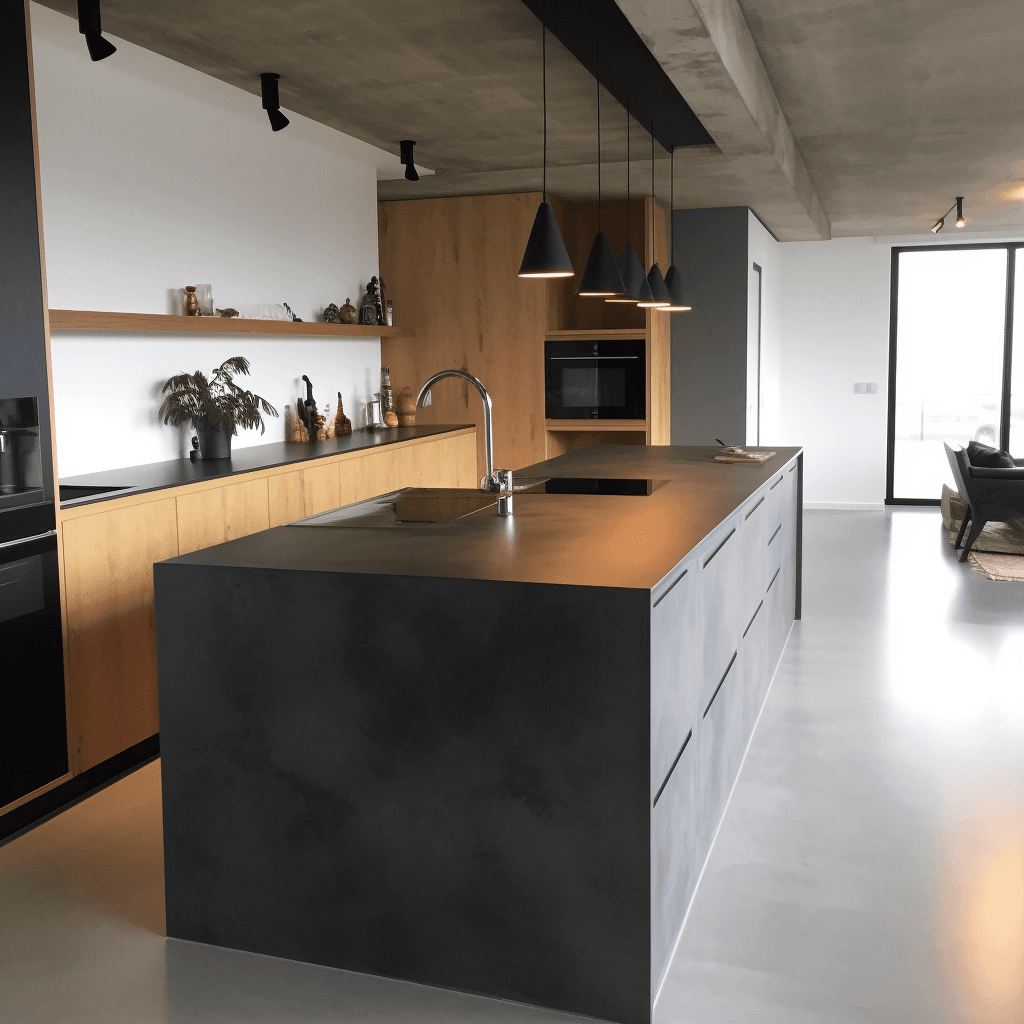
How much does microcement cost in Melbourne?
Installed microcement generally ranges from $160–$300 AUD per square metre. Here is what moves a project within that range, and what to send for an accurate quote.
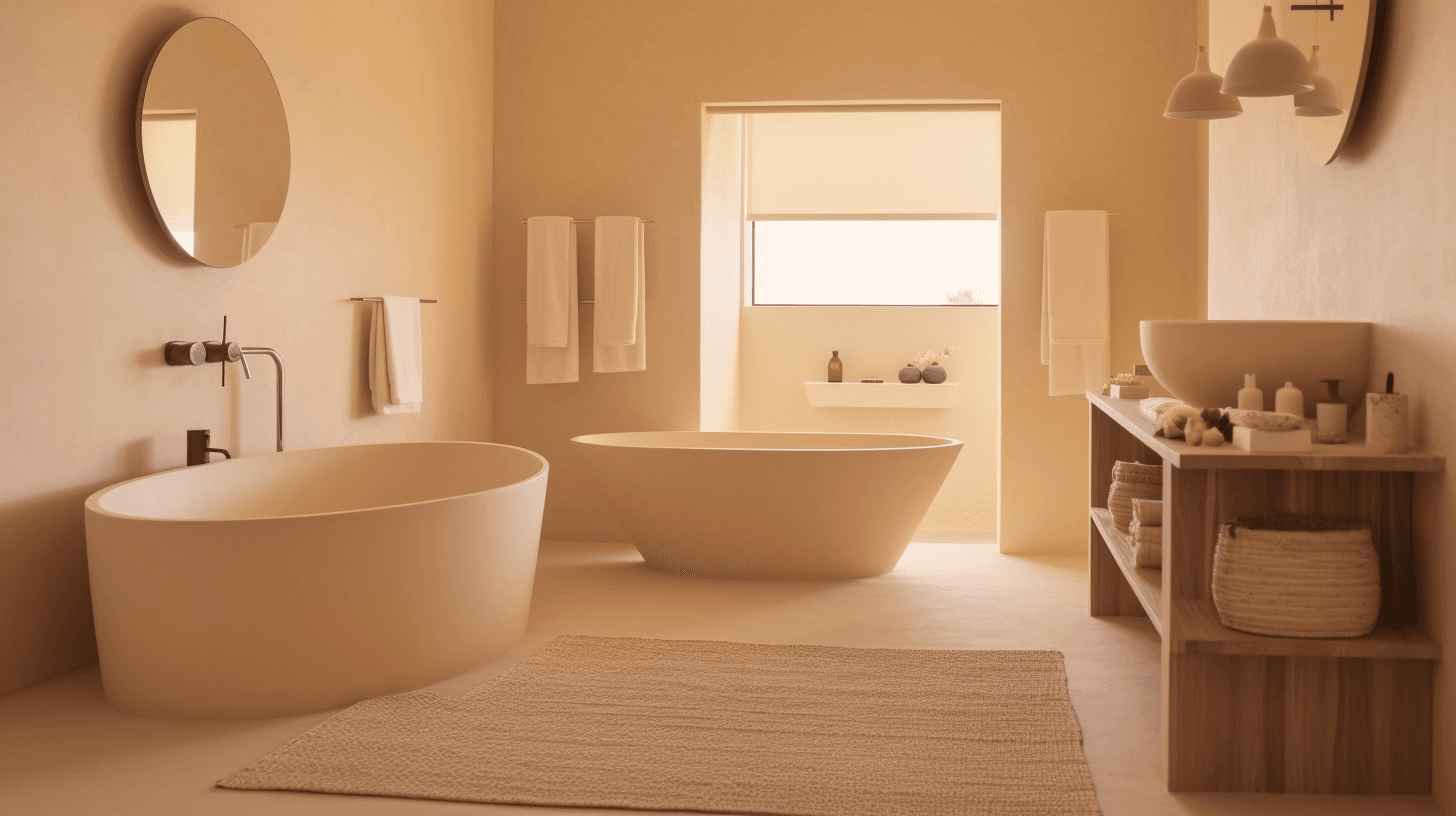
Microcement vs tiles: a practical comparison
Tiles are the familiar choice for bathrooms and kitchens. Here is how a seamless microcement finish compares on cleaning, cost, durability, design and timing.