Service area / South East
Microcement in Melbourne's south east
Microcement in Melbourne's south east covers two kinds of project: renovations in established suburbs such as Oakleigh, Clayton and Mulgrave, and new homes across the growth areas from Berwick to Pakenham and Clyde. For a new build, timing matters as much as the finish itself, so the work is planned with your builder around a substrate that's ready.
Local highlights
Timed to the build
Microcement goes on once new screeds and cement mortars have reached an advanced setting stage and their moisture is below 5%.
Coordinated with your builder
The application window is agreed with your builder, so the substrate is ready and other trades stay off the surfaces being finished.
Underfloor heating protocol
Underfloor heating must be run and then switched off in a set sequence before microcement is applied over it.
One floor, many rooms
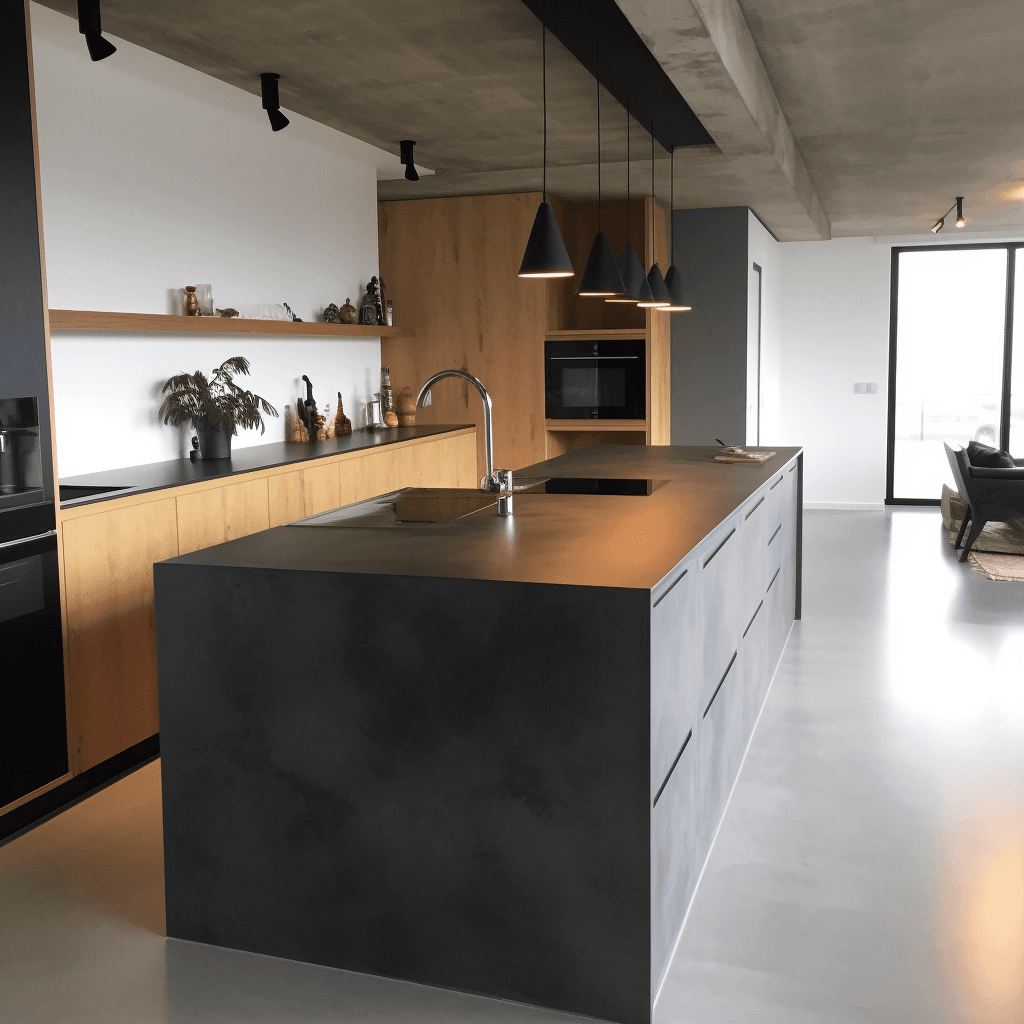
In an open-plan new home, a single continuous floor can run through the kitchen, dining and living areas without grout lines.
Established suburbs and a growth corridor
The south east stretches from established suburbs in the City of Monash, such as Oakleigh, Clayton, Mulgrave and Wheelers Hill, through Springvale, Noble Park and Dandenong to Berwick and beyond. Officer, Pakenham, Cranbourne and Clyde sit in Melbourne's south-east growth corridor, where new estates are still being built.
In the established suburbs, microcement tends to be a renovation finish applied over existing tiles and cement-based surfaces. In a new home, it can be specified from the start, which gives you more control over the substrate, the levels and the timing.
A knockdown-rebuild follows the same rules as any new build. The substrate is new, so the timing of the finish needs the same care.
New builds: when is the substrate ready for microcement?
New screeds and cement mortars hold a lot of water, and they need time before any finish goes on. Microcement should only be applied once a screed or mortar has reached an advanced setting stage, which typically takes three to four weeks depending on the weather, and once its humidity is below 5%.
The moisture reading, not the calendar, decides when work can start. The substrate must also be stable, level and clean; a self-levelling mortar can correct levels where needed, and plaster or plasterboard walls are suitable once they're sound and dry.
An expansion joint is also needed between the screed and the walls so the screed can expand. Our underfloor heating guide sets out the full protocol and why each step matters.
Working with your builder
On a new build, microcement is one trade in a sequence, so the useful conversation happens early, while the builder is setting the program. These are the points worth settling:
- Which floors, walls and wet areas will be finished in microcement, and the substrate for each
- When screeds and mortars will be laid, so setting and drying time is built into the program
- How wet-area waterproofing will be handled, since microcement is a finish rather than a membrane and requirements should be confirmed by your builder or relevant professionals
- An application window, typically 5 to 7 days depending on size and complexity, when other trades stay off those surfaces
- Protection for the finished surface in its first week, while it continues to harden
Builders and developers can send plans and specifications through the enquiry form. The process page sets out each stage, from assessment to curing.
Renovations and shopfronts closer in
Not every south-east project is new. In Oakleigh, Clayton, Springvale and Dandenong, microcement suits bathroom and kitchen updates over firmly adhered tiles, as well as shopfronts and eateries where a floor without grout lines is simpler to keep clean.
Further out, Keysborough, Hallam, Endeavour Hills and Narre Warren are largely family suburbs. Bathroom and kitchen updates there follow the same approach, with firmly adhered tiles finished over rather than removed.
For larger floor areas, see our notes on microcement floors, and send an enquiry to compare options before selections are locked in with your builder.
South East
Local questions.
01Do you work on new builds in Clyde, Officer and Pakenham?
Yes. Luxury Concrete works across Melbourne and beyond, including the south-east growth areas. Send the site address and current build stage, and the timing can be planned with you and your builder.
02How long after a new screed is laid can microcement be applied?
Once the screed has reached an advanced setting stage, typically after three to four weeks depending on the weather, and its humidity is below 5%. Moisture is measured on site before work is scheduled, because drying varies with the weather and the build.
03Can microcement be used in the wet areas of a new home?
Yes. Once sealed it's water-resistant and suits bathrooms and laundries, but it isn't a waterproofing membrane. Wet-area waterproofing should be specified and confirmed by your builder or other relevant professionals before the finish goes on.
Across Melbourne
Other areas.
- 01Inner MelbourneMelbourne CBD, Carlton, Fitzroy, Collingwood
- 02Eastern SuburbsKew, Hawthorn, Camberwell, Canterbury
- 03Knox & Dandenong RangesFerntree Gully, Upper Ferntree Gully, Boronia, Bayswater
- 04BaysideElwood, Elsternwick, Brighton, Hampton
- 05Northern SuburbsBrunswick East, Coburg, Northcote, Thornbury
- 06Western SuburbsFootscray, Seddon, Yarraville, Kingsville
- 07Mornington PeninsulaFrankston, Mount Eliza, Mornington, Mount Martha