Surfaces
Microcement furniture
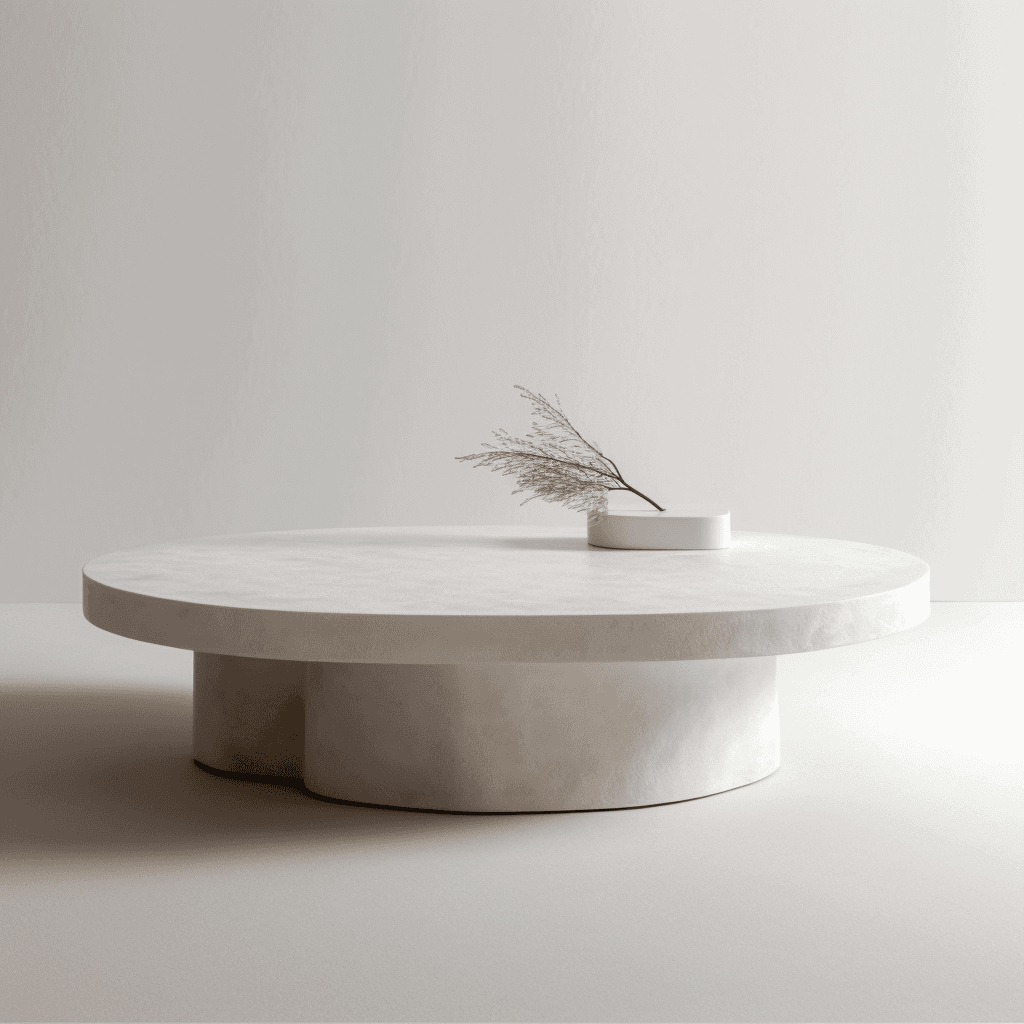
Microcement can renew an existing piece or give a custom furniture form one continuous finish.
In context
The application in context.
Microcement is an excellent option for furniture. Whether you want to breathe new life into an old piece or create something unique, Luxury Concrete can help. Our expert carpenters and microcement specialists are ready to bring your vision to life.
One finish, top to base
Microcement wraps edges, curves and plinths as one surface, so a piece reads as a single object rather than an assembly of parts.
Matched to the room
A table, bench or plinth can share the colour of the floor or walls, or contrast with them deliberately.
Room for custom forms
Purpose-built pieces can be planned around a stable, suitable substrate from the outset, which suits curved and monolithic shapes.
Durable once sealed
The sealed surface resists everyday knocks and scratches, and a wipe with a pH-neutral cleaner keeps it presentable.
 Inspiration image
Why microcement suits furniture
Microcement furniture turns a table, bench or plinth into a single continuous form. Because the finish is applied by hand in thin layers, it can wrap edges and curves without joins, giving even a simple piece a sculptural, monolithic quality.
It is also a way to connect furniture with architecture. A coffee table in the same tone as the floor, or a bench that appears to grow out of a wall, makes a room feel composed rather than furnished piece by piece. If the material is new to you, what microcement is is a useful place to start.
Existing pieces and purpose-built forms
There are two starting points, and each is planned differently:
- Renewing an existing piece. It must be rigid and stable, with a surface the finish can bond to. Metal, marble and tiled tops can be suitable; natural timber is not advised, because it moves as temperature and humidity change.
- Building something new. A custom piece can be designed around a suitable, stable substrate from the start, giving more control over shape, edges and weight.
In both cases, the construction is reviewed before any recommendation is made. Pieces assembled from parts that could move at different rates, such as mixed materials joined together, may not be suitable.
Pieces that work well
Microcement suits furniture with generous, simple surfaces: coffee and side tables, dining and console tables, built-in benches, plinths, shelving, and reception or display counters. Very slender or flexible elements are generally less suited, because any flex in the piece can show in the finish. Built-in pieces, such as a bench that runs along a wall or a plinth that doubles as a step, often work especially well, since they are rigid by nature and connect directly to the room.
Think about use as well as form. A coffee table sees drinks and the occasional pair of feet, while a dining table sees hot dishes, cutlery and daily wiping. Those uses shape the sealer, texture and colour we recommend. For kitchen and bathroom tops, see benchtops and vanities.
Colour, texture and edge detail
White and pale finishes such as Blanco and Alaska give furniture a soft, gallery-like presence, Camel brings warmth, and Gris Marengo or Graphite read as solid and grounded. Keep texture smooth on tabletops that need to be wiped often, and allow more movement on bases and sides.
Edges are where furniture is touched and knocked most, so softened or rounded profiles are usually more forgiving than sharp corners. Browse the range on colours and textures, then send an enquiry to talk through the piece and its finish.
Caring for microcement furniture
Use coasters under glasses and mugs, put hot dishes on trivets or placemats, and wipe spills promptly, particularly oil, wine, coffee and acidic foods such as citrus or vinegar. Clean with a damp microfibre cloth and a pH-neutral product, avoid abrasive pads, and see the cleaning and maintenance guide for sealer upkeep over time.
Colour direction
Finishes to start with.
A starting palette for furniture. Compare physical samples in your own light before deciding.
Browse every finish




01Can you apply microcement to my existing timber table?
Natural wood is generally the wrong base for microcement, since it expands and contracts with the seasons and can crack the finish. Send photos and details of how the piece is built when you get in touch, so the options, including a purpose-built alternative, can be discussed.
02Does microcement add much weight to furniture?
The finish itself is only 2–3 mm thick, so it adds little weight. The overall weight of a piece depends mainly on what it is built from, which matters for large tables and wall-hung shelving.
03Will hot cups or plates mark a microcement table?
Sealed microcement is durable, but direct heat from hot cookware can damage the protective sealer. Coasters, placemats and trivets are the simplest protection, and spills should be wiped up promptly.
Keep exploring
Related applications.
 Inspiration image
Microcement gives kitchen benchtops, islands and bathroom vanities a seamless, hand-finished surface, and suitable existing benchtops can be coated in place.
 Inspiration image
Living rooms benefit from a continuous, hard-wearing surface that keeps the interior visually calm and straightforward to clean.
 Inspiration image
A hand-trowelled microcement feature wall brings depth through colour and texture while keeping the surface continuous.